










7 Powerful passive income apps That Can Boost Your Money Goals 😎📧
What Are Passive Income Apps? 😎
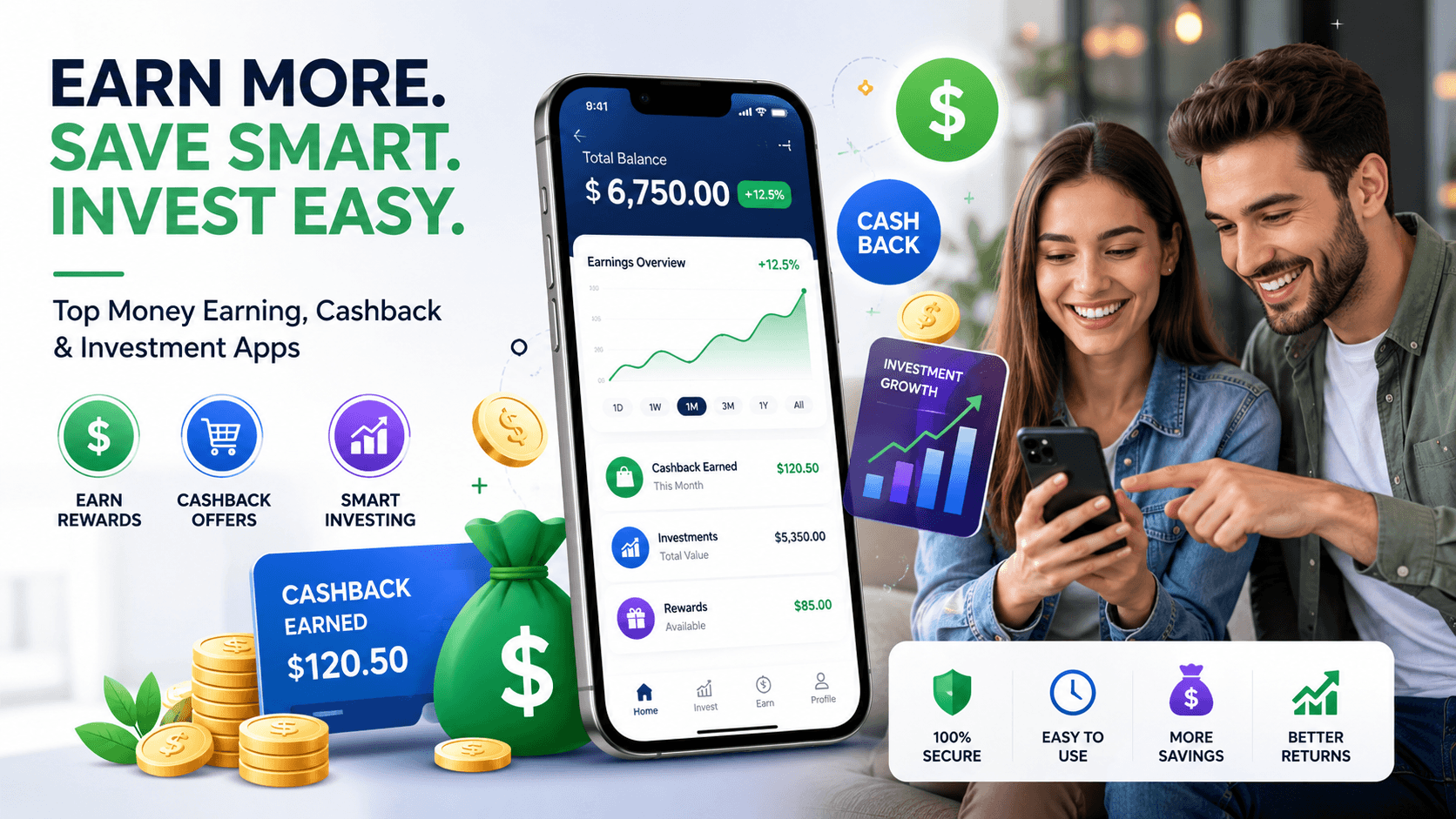
passive income apps are mobile or web-based tools that help users earn small amounts of money, rewards, cashback, or investment returns with limited ongoing effort. They are not magic money machines, and they usually won’t replace a full-time job. Still, they can be useful for people who want to make their normal spending, saving, or digital habits work a little harder.
Some apps pay you for shopping through partner links. Others help you invest spare change, rent out unused items, complete simple research tasks, or earn rewards from daily activity. The main idea is simple: instead of letting your phone only consume time, you use it to create small financial wins.
However, it’s important to stay realistic. Many apps pay slowly, and some require effort at the start. A cashback app may only save a few dollars per month. A survey app may pay more, but it is not truly passive because you must answer questions. An investing app may build wealth over time, but returns are never guaranteed.
The best approach is to treat these apps as extra tools, not a guaranteed income plan. When used wisely, they can support savings goals, help beginners learn about money, and make everyday actions more rewarding.
How Passive Income Apps Actually Make Money 📧
Most apps earn revenue through partnerships, advertising, transaction fees, subscriptions, or data-based market research. For example, cashback apps often receive a commission when users shop through their links. They share part of that commission with the user. Survey platforms may get paid by companies or researchers that want consumer opinions. Investment apps may charge management fees, subscription fees, or other account-related costs.
This matters because you should always understand how an app makes money before signing up. If an app promises huge earnings with no clear business model, that’s a red flag. The Federal Trade Commission warns consumers to be careful with money-making opportunities that sound too easy or require upfront payments without clear value.
-Cashback and Rewards Apps
Cashback apps are among the easiest to understand. You shop at a partner store, scan a receipt, activate an offer, or use a shopping link. In return, you receive points, gift cards, or cash. This is more like “earning back” than creating brand-new income, but it can still help your budget.
-Micro-Investing Apps
Micro-investing apps let users invest small amounts of money, sometimes by rounding up purchases. This can be a helpful way to start building long-term habits. Still, investing carries risk, and users should read fees carefully because small monthly charges can reduce gains on low balances.
-Survey and Research Apps
Survey apps pay users for opinions, polls, or research tasks. These apps are usually active income, not fully passive income. Some 2026 reviews suggest realistic earnings may vary widely based on availability, profile fit, and time spent.
Best Types of Passive Income Apps to Consider
There are many types of apps, but not all are equal. Some are better for beginners. Some are better for long-term financial goals. Others are only useful if you already own something valuable, such as a car, room, tool, parking space, or digital audience.
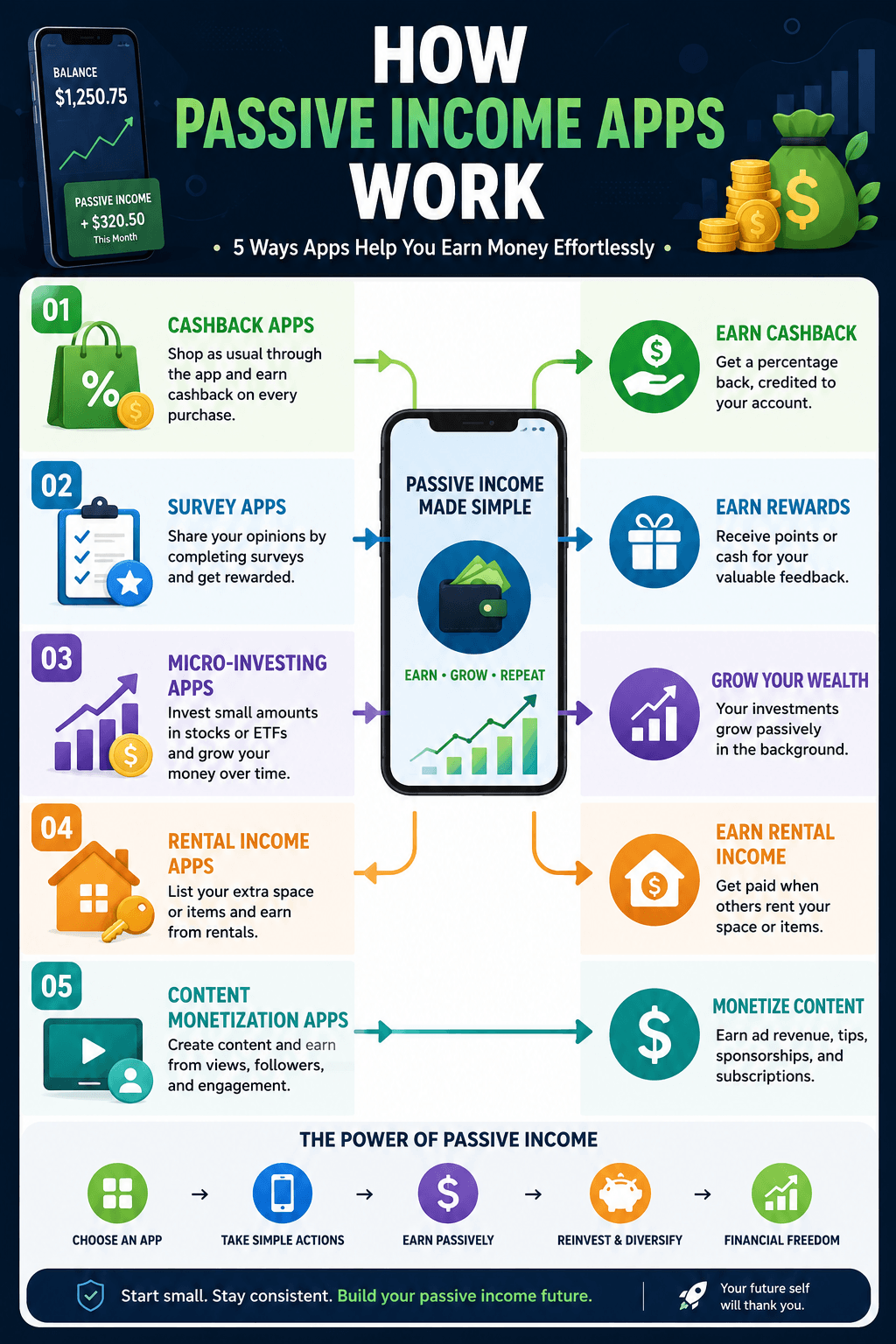
| App Type | Best For | Effort Level | Main Caution |
|---|---|---|---|
| Cashback apps | Everyday shoppers | Low | Don’t overspend just to earn rewards |
| Survey apps | Quick small rewards | Medium | Not fully passive |
| Investment apps | Long-term growth | Low to medium | Market risk and fees |
| Rental apps | People with unused assets | Medium | Damage, rules, and insurance |
| Content monetization apps | Creators | High at first | Requires audience building |
-Cashback Apps
Cashback apps are great for people who already shop online or buy groceries. The golden rule is simple: only use cashback on things you planned to buy anyway. Otherwise, the app may encourage extra spending, which defeats the purpose.
-Investment Apps
Investment apps can support long-term wealth building. They may offer stocks, ETFs, retirement accounts, or automated portfolios. These tools are helpful, but users should learn the basics first. Investments can go up or down, so they are not guaranteed income.
-Rental Apps
Rental-based apps can create stronger income if you own useful assets. Examples include renting storage space, equipment, or property. This can be powerful, but it is less passive than it sounds because you may need to manage bookings, maintenance, messages, and safety rules.
Benefits of Using Passive Income Apps
The biggest benefit is convenience. Your phone is already with you, so adding a few smart apps can make money management easier. You can track rewards, automate savings, invest small amounts, and find simple earning opportunities from one device.
Another benefit is low entry cost. Many apps are free to start, though some charge fees. This makes them beginner-friendly. You don’t need a large business, office, or expensive equipment. You just need good judgment, patience, and consistency.
These apps can also teach useful money habits. Cashback apps teach smart shopping. Budgeting apps teach tracking. Investing apps introduce long-term thinking. Survey apps show how market research works. Over time, these small lessons can help users make better financial choices.
For students, beginners, or busy workers, these tools can feel like a low-pressure way to explore side income. The money may be small, but the habit of looking for smart financial opportunities is valuable.
Risks, Red Flags, and Safety Tips 🚨
Not every app is safe or worth your time. Some apps overpromise. Others collect too much personal data. A few may delay payments, hide fees, or push risky offers. That’s why safety should come before earnings.
Watch out for apps that promise guaranteed high returns, require large upfront payments, pressure you to recruit friends, or make it hard to withdraw money. These are common warning signs. The FTC advises consumers to be cautious with income opportunities and to research before paying money or sharing sensitive details.
- *Read recent reviews before signing up.
- *Check payout rules and minimum withdrawal amounts.
- *Avoid apps that ask for unnecessary sensitive information.
- *Use strong passwords and two-factor authentication.
- *Don’t connect your main bank account unless the app is trusted.
- *Never spend more just to earn rewards.
How to Choose the Right App
The right app depends on your lifestyle. A frequent online shopper may benefit from cashback apps. A patient saver may prefer investing apps. Someone with extra storage space may earn more through rental platforms. A person with free time may try research or survey apps.
Before choosing, ask three simple questions: Is it safe? Is it realistic? Does it fit my normal routine? If the answer is yes, the app may be worth testing. If it feels confusing, risky, or too good to be true, skip it.
Also compare fees. A small monthly fee may seem harmless, but it can eat into your earnings. For example, if you earn $4 in rewards but pay $3 in fees, your real profit is only $1. That’s why “free” or low-cost tools are often better for beginners.
Tips to Maximize Earnings from Money-Making Apps
To get better results, use apps with a plan. Don’t download twenty apps and forget them. Start with two or three that match your habits. Track your earnings for one month. Then keep the apps that actually help and delete the ones that waste time.
- -Stack rewards: Use cashback with coupons or store deals when allowed.
- -Set a goal: Save rewards for school supplies, emergency savings, or a fun purchase.
- -Check weekly: Some offers expire quickly.
- -Track income: Use a simple spreadsheet or notes app.
- -Avoid distractions: Don’t let small rewards steal hours of your day.
The smartest users treat these apps like tiny financial tools. They don’t chase every offer. They focus on apps that save time, protect privacy, and create real value.
Passive Income Apps
Tax Considerations for App-Based Income
Money earned through apps may be taxable, depending on where you live and how the income is earned. In the United States, the IRS says gig economy income is taxable and must be reported, even when it is part-time, temporary, or not reported on a tax form.
This does not mean every reward works the same way. Cashback on purchases may be treated differently from paid work, survey income, referral bonuses, or rental income. Since rules can vary, it’s smart to keep records and ask a trusted tax professional or official tax source when needed.
A simple habit helps a lot: record the app name, date, amount earned, payout method, and any fees. Good records make tax time less stressful.
FAQs About Passive Income Apps
1. Are passive income apps legit?
Some are legit, but not all are worth using. Choose apps with clear payout rules, strong reviews, transparent fees, and a safe privacy policy.
2. Can I make a full-time income with these apps?
Usually, no. Most apps are best for extra money, savings, rewards, or long-term financial habits. They should not be viewed as guaranteed full-time income.
3. Which app type is best for beginners?
Cashback apps are often easiest because they fit normal shopping habits. Survey apps are simple too, but they require more active effort.
4. Are investment apps passive?
They can be partly passive because automation helps. However, investing always includes risk, and users should understand fees and market changes.
5. Do these apps cost money?
Many are free, but some charge subscriptions, account fees, or withdrawal fees. Always check the cost before joining.
6. How do I avoid scams?
Avoid apps that promise huge guaranteed earnings, require large upfront payments, hide payout rules, or pressure you to recruit others.
7. Do I need to report app income?
In many places, yes, certain app-based income may need to be reported. Keep records and check official tax guidance for your country.
Conclusion: Are Passive Income Apps Worth It? 😎📧
passive income apps can be worth it when you use them wisely. They are not a shortcut to instant wealth, but they can help you earn small rewards, save money, learn investing habits, and make better use of your phone.
The best strategy is to stay realistic. Pick safe apps, avoid hype, track your results, and protect your personal information. Start small, learn as you go, and focus on tools that fit your everyday life.
In the end, these apps work best as part of a bigger money plan. Combine them with budgeting, saving, learning new skills, and smart spending. That way, your phone becomes more than a screen—it becomes a useful partner in your financial journey.