











Crypto Earning Apps: 7 Powerful Ways to Earn Safely in 2026 😎
What Are Crypto Reward Platforms? 📱
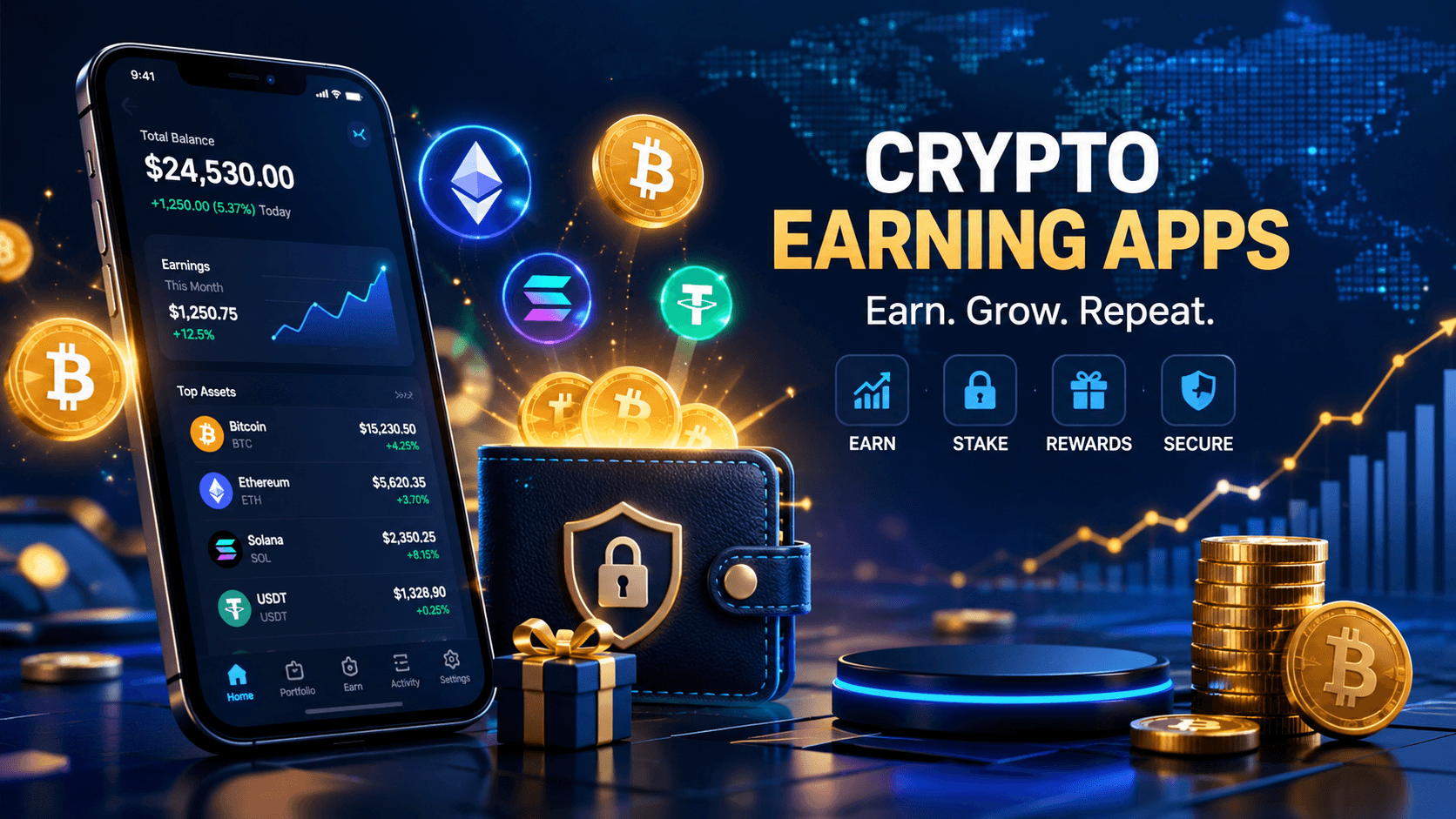
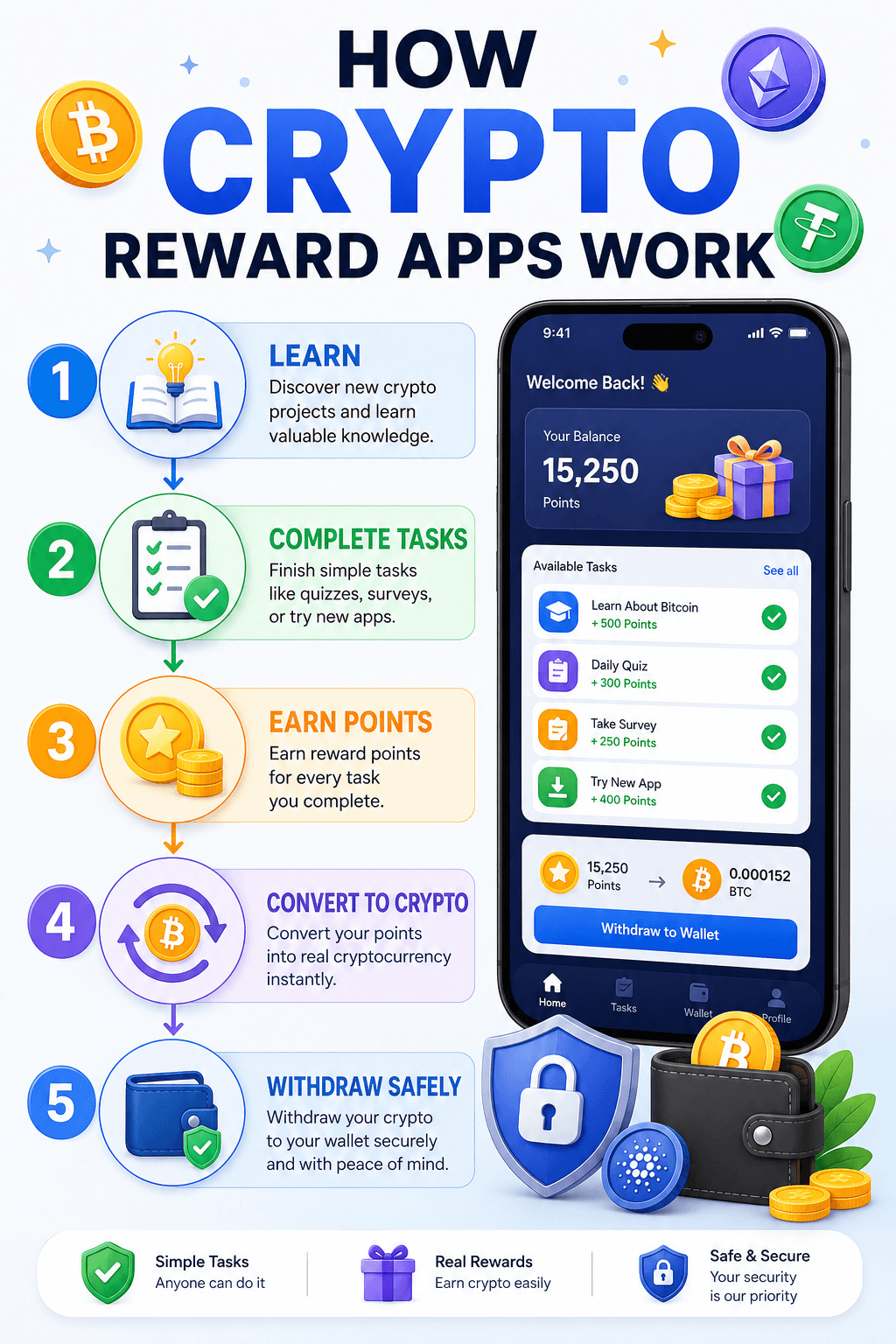
Crypto reward platforms are mobile or web apps that offer small cryptocurrency rewards for simple actions. These actions may include watching lessons, completing quizzes, shopping through partner stores, playing blockchain games, inviting friends, or holding supported digital assets. The main idea is simple: users complete a task, and the app gives a reward in crypto or points that may convert into crypto.
However, it’s important to stay realistic. These apps are not a magic money machine. Most rewards are small, and some apps may include fees, limits, waiting periods, or strict withdrawal rules. Also, crypto prices can move up and down quickly, so a reward worth a few dollars today may be worth less tomorrow. FINRA notes that crypto assets carry investment risks, including volatility and possible fraud. Learn more from FINRA.
How Crypto Earning Apps Work ⚙️
Most crypto earning apps use reward systems to attract users. The app may earn money from ads, partner brands, trading fees, blockchain networks, or sponsored lessons. Then, part of that money is shared with users as rewards. In other cases, the app may offer token incentives to grow a community around a project.
Before using any platform, users should check how the app makes money. A clear business model is a good sign. A vague promise like “earn huge profits daily with no risk” is a serious red flag. The FTC warns that scammers often use cryptocurrency promises to trick people into sending money, sharing private information, or trusting fake platforms. Read the FTC crypto scam guide.
1. Learn-to-Earn Rewards 🎓
Learn-to-earn apps reward users for studying short lessons about blockchain, wallets, tokens, security, or specific crypto projects. After reading or watching a lesson, users may answer a quiz. If they pass, they may receive a small crypto reward.
This method is one of the most beginner-friendly options because it focuses on education first. Instead of asking users to trade or take big risks, it helps them understand basic ideas. Still, rewards are usually limited, and some lessons may promote specific tokens. So, users should treat the information as a starting point, not as financial advice.
2. Cashback and Shopping Rewards 🛒
Some apps give crypto cashback when users shop through approved merchants. For example, a user may buy clothes, food, software, or travel services through a partner link and receive a small percentage back in Bitcoin, stablecoins, or another token.
This can be useful for people who already planned to buy something. The golden rule is simple: never spend extra money just to earn a small crypto reward. A 2% reward is not helpful if it pushes someone to buy things they don’t need.
3. Staking and Yield Features 🔐
Some apps allow users to earn rewards by staking certain cryptocurrencies. Staking means locking or holding tokens to help support a blockchain network. In return, users may receive more tokens over time.
While staking may sound easy, it can carry risks. Token prices can fall. Some platforms may freeze withdrawals. Some rewards may change without much notice. The SEC has warned investors to use extreme caution with crypto asset platforms, especially when judging safety based only on platform claims or proof-of-reserves statements.
4. Play-to-Earn Games 🎮
Play-to-earn games offer rewards for game progress, battles, missions, tournaments, or item trading. These games may use NFTs, tokens, or in-game points that can sometimes be exchanged for crypto.
Still, gaming rewards are not guaranteed income. Some games require upfront purchases, while others have tokens that lose value quickly. A safe beginner approach is to avoid games that require large payments before playing. Fun should come first, and rewards should be treated as a bonus.
5. Referral Bonuses 📧
Referral programs reward users for inviting friends. When a friend signs up and completes certain actions, both users may receive a bonus.
This sounds simple, but users should be careful. Never pressure friends to join risky apps. Never promote a platform that you haven’t checked carefully. A trusted app should clearly explain its fees, rules, privacy policy, reward limits, and withdrawal process.
Benefits of Crypto Reward Apps
Benefits of Crypto Reward Apps 🌟
Crypto reward apps can be helpful when used with care. They may introduce beginners to blockchain without requiring large investments. They can also teach users how wallets, addresses, tokens, fees, and exchanges work in a practical way.
- -They can make crypto education more interactive.
- -They may offer small rewards for everyday actions.
- -They can help users practice wallet safety.
- -They may support cashback on planned purchases.
- -They can turn learning into a more engaging experience.
Even so, rewards should be seen as small extras. A smart user does not depend on apps for income. Instead, they focus on learning, security, and patience.
Major Risks You Must Know ⚠️
The biggest risk is believing that every crypto reward app is safe. It isn’t. Some apps are real, some are poorly managed, and some are outright scams. A fake app may copy the name or logo of a popular platform. It may ask for a seed phrase, private key, or payment before allowing withdrawals. These are major warning signs.
Scams and Fake Apps
Scammers often use exciting words like “guaranteed profit,” “limited-time bonus,” “double your crypto,” or “risk-free income.” Real crypto rewards are never completely risk-free. If an app promises huge daily earnings for easy tasks, it should be avoided.
Price Volatility
Crypto values can change very quickly. A reward may look valuable today but drop later. This is why users should not treat app rewards as stable savings.
Wallet and Account Security
Security matters a lot. Users should never share seed phrases, private keys, passwords, or one-time codes. A real support team will not ask for these details. Two-factor authentication, strong passwords, and official app stores can help reduce risk.
How to Choose a Trusted App ✅
Before downloading an app, check its reputation. Look for clear company information, real user reviews, transparent fees, simple withdrawal rules, and a strong privacy policy. Also, check whether the app has been mentioned by trusted sources. Avoid unknown apps that only appear in random ads or direct messages.
| What to Check | Why It Matters |
|---|---|
| Official website | Helps confirm the app is real |
| Withdrawal rules | Shows whether rewards are actually usable |
| Fees | Prevents surprise costs |
| Security features | Protects accounts and wallets |
| User reviews | Reveals common problems |
Safety Checklist Before Downloading 🛡️
- -Download only from official app stores or verified websites.
- -Never share your seed phrase or private key.
- -Use a strong, unique password.
- -Turn on two-factor authentication.
- -Read withdrawal limits before earning.
- -Avoid apps that ask for upfront payments to unlock rewards.
- -Check whether the app has real contact details.
- -Be careful with apps promoted through spam messages.
Best Practices for Beginners 🚀
Beginners should start slowly. Choose education-based or cashback-style apps before trying advanced features like staking or DeFi rewards. Keep rewards small, track your activity, and don’t connect your main wallet to unknown platforms.
It’s also wise to keep learning from trusted sources. Crypto is full of exciting ideas, but it also has risks. A balanced mindset helps users avoid hype and make smarter choices.
FAQs About Crypto Earning Apps ❓
1. Are crypto reward apps safe?
Some are safer than others, but none are risk-free. Always check reviews, fees, security features, and withdrawal rules before using one.
2. Can I make real money from these apps?
Some users may earn small rewards, but these apps should not be treated as a full-time income source.
3. Do I need money to start?
Some apps are free, while others require purchases, deposits, or fees. Beginners should be careful with any app that asks for money upfront.
4. What is the safest way to earn crypto?
Learning rewards and cashback on purchases you already planned are usually safer than risky trading, unknown games, or high-yield promises.
5. What is a major red flag?
A major red flag is any app that asks for your seed phrase, private key, or payment before you can withdraw rewards.
6. Should beginners use staking apps?
Beginners should first learn how staking works. Staking may involve price changes, lock-up periods, and platform risk.
Conclusion 🎯
Crypto earning apps can be a fun and useful way to explore digital rewards, blockchain education, cashback, and simple crypto tools. They work best when users stay realistic, protect their accounts, and avoid promises that sound too good to be true.
The smartest approach is to learn first, earn slowly, and use trusted sources before making decisions. With good habits, users can enjoy the benefits of crypto reward platforms while reducing common risks. Stay curious, stay careful, and keep your digital safety at the center of every choice.